|
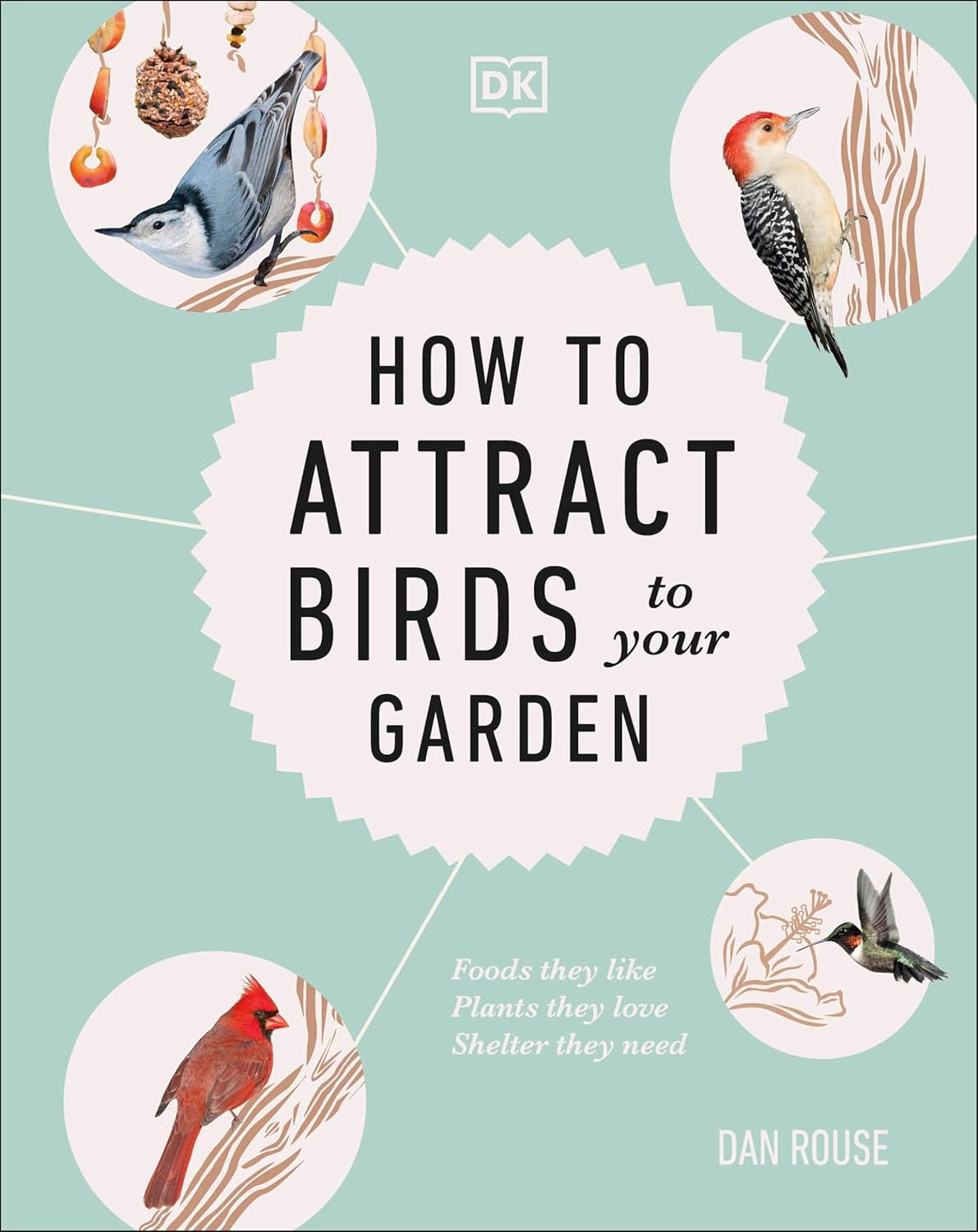
Dan Rouse, How to Attract Birds to Your Yard (DK, 2020)
Although I am very much an amateur when it comes to birding and habitat creation, this book is still, for the most part, a little below my level. Rouse is writing to the novice, the person who has a yard and would like to make it more welcoming for our avian friends. But, although written for beginners, I still found it useful as a refresher on various topics covered here. In the opening chapters, Rouse covers the basics such as bird behavior and interaction, nesting habits, and the types of birds that are likely to frequent a backyard habitat. Then he addresses the basics of feeding the birds, delving into specific topics like how a bird's feet and beak affect their eating habits. Of course he also discusses the types of food you can provide, from black oil sunflower seeds to mealworms, fresh fruit to sugar water. He explains how to make your own suet, too. He also examines the various types of feeders, explaining which foods go in which feeders and what species of birds will likely use them. He devotes several pages to providing instructions on how to build several types of feeder from household items, and describes the benefits of creating a feeder station -- where several types of food and feeder are provided in close proximity to one another -- as opposed to a secondary or solitary feeder for shyer birds. Next up is nesting, and Rouse looks at several types of birdhouses -- of course he explains how to build one, too -- as well as explaining how to provide nesting sites using discarded items from an old boot to a teapot. He suggests appropriate nesting materials you can provide in your yard and tells you how to clean and maintain your avian domiciles. More than halfway through the book, the author addresses one of the topics I am most interested in -- providing a natural, beneficial environment for birds through thoughtful landscaping. Unfortunately, it's here where he lets me down. Although Rouse offers some solid basic information on planting strategies, such as layering and creative use of potted plants, he avoids the all-important subject of natives vs. non-natives. In fact, in a two-page "perfect plants" spread on nectar-rich flowers, his first suggestion is the highly invasive butterfly bush. Boo! Sure, it's pretty, and yes, it attracts lots of butterflies, but it is ultimately bad for butterflies because it only feeds one stage of their development, spreads its seeds on the wind and outcompetes far more beneficial native plants. Unless you live in central China, please ignore that bit of bad advice. The damage caused by that one page outweighs much of the good information detailed elsewhere in the book. Rouse then returns to safer, less controversial subjects, such as providing water for birds -- from a basic birdbath to a more ambitious backyard pond -- and keeping birds safe from pests, wandering cats and diseases. He closes the book with 56 profiles of birds one might commonly find in a backyard, including each bird's size, identifying features, distribution, call, habitat, feeding habits, nesting, plant preferences and water needs. All in all, How to Attract Birds to Your Yard is a useful book for beginning birders, with a lot of good information. It is nicely organized and illustrated and, while it doesn't go in depth on many subjects, it's a solid overview to get people started on a fun, rewarding and environmentally beneficial hobby. Just don't pay too much attention to the pages on plants. 
|
 Rambles.NET book review by Tom Knapp 13 September 2025 Agree? Disagree? Send us your opinions!  


 |